Build a freshwater tank that actually stays stable.
Calculators, species guides, and beginner-safe decisions in one place. Sourced from FishBase, aquaculture research, and manufacturer specs — with sources shown where the decision depends on them.
Or jump to the aquarium volume calculator — our most-used tool.
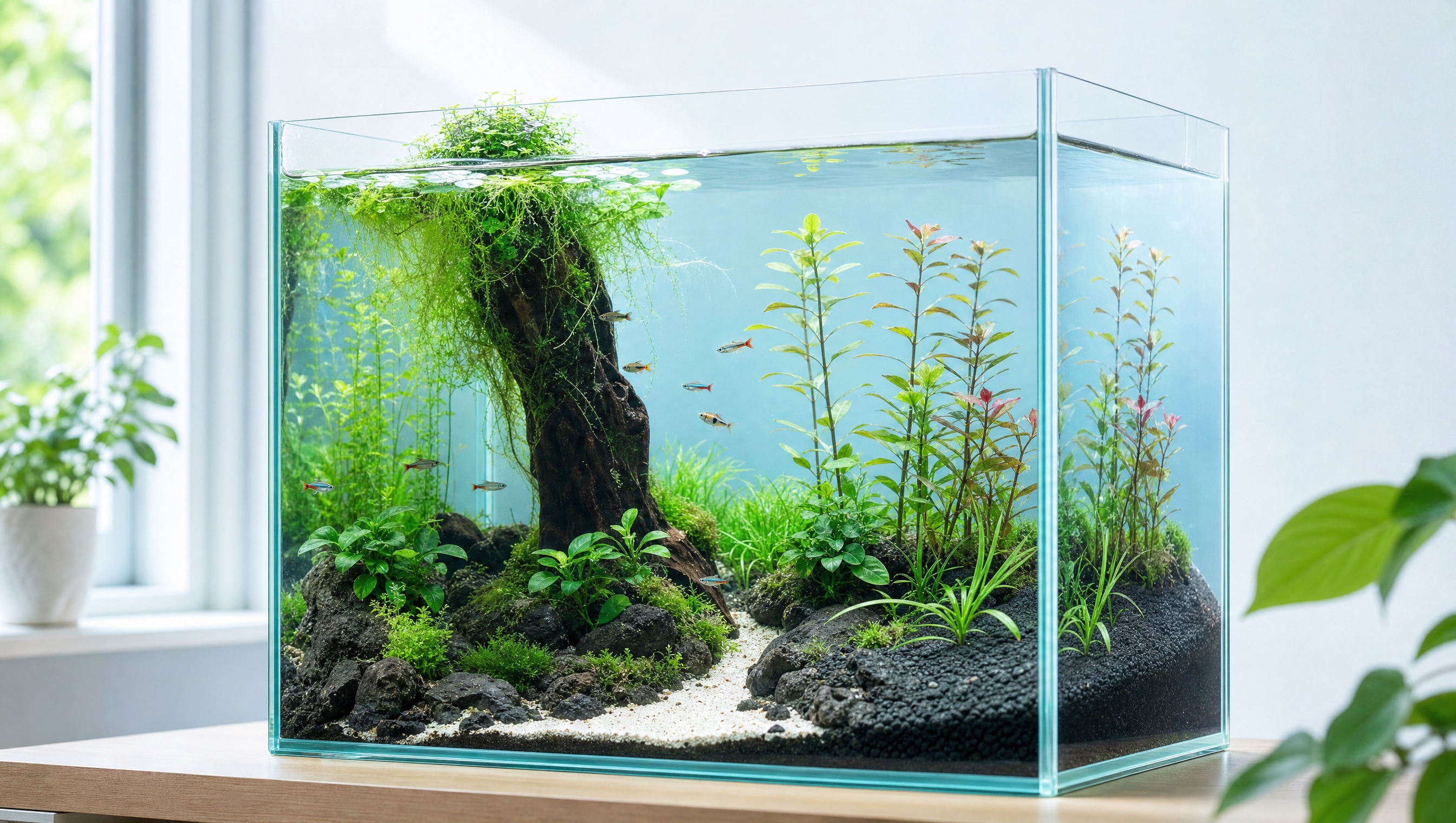
Freshwater setup path
New fish owner? Build a stable tank in the order the decisions actually arrive. Each step links to the calculator or guide that handles it.
- 01Calculator
Plan the tank
Real working volume — gallons, litres, water weight — for the size you're sizing toward.
- 02Guide
Cycle the water
Grow the bacteria that keep ammonia and nitrite at zero before any fish go in.
- 03Calculator
Choose compatible fish
Pick a stocking that fits the tank, the parameters, and each other.
- 04Guide
Size equipment
Heater wattage, filter GPH, and air-pump output — sized for the tank you actually have, not generic buying advice.
- 05Emergency
Fix bad test readings
Ammonia, nitrite, or gasping fish? Get the response math by severity tier.
- 06Calculator
Maintain weekly
Per-session volume, cadence, dechlorinator dose — the routine that prevents emergencies.
- 07Species
Read up on your species
Care guides for the 14 species in the catalog — schooling, parameters, tank-mate fit.
- 08Bonus
Play & collect
Optional light loop. Catch the species you're learning about in the fishing mini-game.
Start with the tank, then add fish.
Four steps in the order that actually works. Most beginner-tank problems trace back to skipping one of these.
- 01
Measure the tank
A 20-gallon label usually holds 17 gallons of water. Inside dimensions × cross-section ÷ 231 cubic inches gives the real number — the one that matters for dosing, stocking, and floor load.
Watch for Outside-dimension math overstates volume by half a gallon or more on any tank with thick rims.
- 02
Cycle before stocking
Beneficial bacteria need four to eight weeks to colonize the filter before a tank can hold fish without ammonia burns. Skipping the cycle is the most common cause of dead first fish.
Watch for Ammonia spike around week 1, nitrite spike around week 2, both at zero by week 4 — that's the pattern.
- 03
Choose fish by behavior, not inches
The “one inch per gallon” rule fails the moment you stock fish that school, nip, or claim territory. Compatibility comes from temperament + bioload + tank dimensions, not from a length addition.
Watch for Lone schooling fish (neon tetras, harlequin rasboras) usually get aggressive or hide when kept in groups under 6.
- 04
Keep the water stable
A 25–30% water change every week keeps nitrate under 40 ppm in most stocked tanks. Big infrequent changes stress fish more than steady weekly ones — stable wrong-ish numbers beat shifting right-ish numbers.
Watch for Nitrate creeping above 40 ppm with weekly changes usually means overstocked or underfiltered, not a water-change problem.
What's on FishTankMath
- 14
- Freshwater species care guides — schooling, parameters, tank-mate fit.
- 16
- Calculators — volume, stocking, equipment, water-test emergencies.
- Sourced from
- FishBase, manufacturer specs, aquaculture references, and established hobby consensus — with conservative defaults for beginners.
- Beginner-safe
- Defaults err on the conservative side. No live-fish affiliate links.
Where should I start if I'm setting up my first aquarium?
Plan the tank first — get the real working volume in gallons, litres, and water weight before you buy anything, because every later dose, stocking choice, and equipment size depends on it. Cycle the tank for four to eight weeks before adding fish so beneficial bacteria can colonize the filter. Then choose compatible fish, size the heater and filter for the actual tank, and settle into a weekly water-change rhythm. The setup-path cards on the homepage walk through it in that order; the cycling guide and the aquarium volume calculator are usually the first two stops.
Which calculator should I use first?
The aquarium volume calculator if you don't yet know the real working volume of your tank — every dosing, stocking, and equipment number depends on it. The compatibility checker before you buy fish at the store, so you don't bring home a stocking that fights or outgrows the tank. The ammonia or nitrite emergency calculator if a fish is already gasping, listless, or showing red gills. The water-change calculator for routine weekly maintenance once the tank is stable.
Can FishTankMath tell me which fish can live together?
The compatibility checker compares parameter overlap (temperature, pH, hardness), tank-size minimums, schooling-group thresholds, predator-and-prey risk, aggression scores, and total bioload across your stocking plan. It gives you a conservative floor for whether a combination works — individual fish personality still matters, and a single rogue can void the model. Pair the checker with the species care guides for the husbandry context behind each verdict.
What should I do if ammonia or nitrite shows up on a test?
Treat it as urgent but not panic-worthy. Open the ammonia or nitrite emergency calculator, enter your current reading and tank volume, and follow the response math by severity tier — usually a partial water change combined with a dechlorinator dose that binds the toxic forms while the cycle catches up. Stop adding any new fish until ammonia and nitrite both read zero for at least a week. If the tank is new, the cycling guide and the new-tank-syndrome calculator cover what's normal week by week.
Are these calculators veterinary advice?
No. They are educational, beginner-safe decision support — math and sourced ranges that help you make better first decisions about volume, dosing, stocking, and equipment sizing. For sick fish, severe distress, or recurring deaths, consult an aquatic veterinarian or a qualified local aquarium professional. The calculator results give you specific numbers to bring into that conversation, which is usually more useful than a vague description.
Where do the numbers and care rules come from?
FishBase for species anchors (taxonomy, native range, published temperature and pH and hardness tolerances). Manufacturer specifications for equipment sizing math. Aquaculture, veterinary, and fish-health references for disease and treatment guidance where available. Established hobby consensus from references like Aquarium Co-Op, Practical Fishkeeping, and Seriously Fish where primary sources don't answer aquarium-practice questions. Where sources diverge, the conservative beginner-safe answer wins.
By Jimmy L Wu. Calculator-first care guidance backed by sourced research. Educational, not veterinary advice. Updated May 2026. See the editorial policy and disclosures.
Ask a FishTankMath question
Quick answers about aquarium math, how the calculators work, and common freshwater questions. Free, no signup. Not veterinary advice — for sick fish or tank emergencies, talk to an aquatic vet or your local fish store.
Hi, I'm the FishTankMath assistant. I answer questions about aquarium math (volume, water changes, stocking, dosing), how the calculators on this site work, and common freshwater-fishkeeping basics. I'm not a veterinarian — I can't diagnose or treat sick fish. For emergencies or sick livestock, talk to an aquatic vet or your local fish store.